What if we told you there’s a simple podcast optimization that correlates with 6.7x better keyword rankings on Apple Podcasts, yet 91% of podcasters completely ignore it?
After analyzing 332,528 active English podcasts, we discovered that strategic tagline usage in podcast titles and author fields is one of the most underutilized SEO opportunities.
The results? Pretty surprising. And it’s dead simple to implement.
The Discovery: Taglines Correlate with Dramatic Ranking Improvements
Our analysis examined how podcasts perform in keyword rankings based on their use of taglines: descriptive text separated by dashes ( - ), pipes ( | ), or semicolons ( ; ) in their title or author fields.
Here’s what we found:
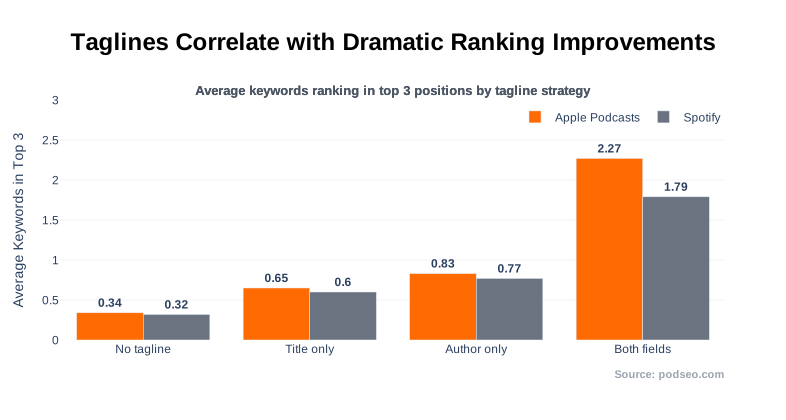
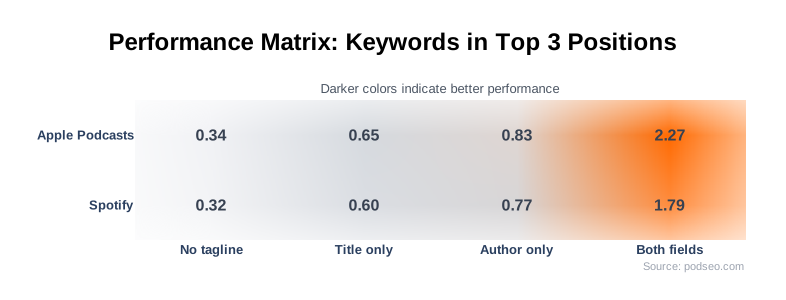
Podcasts using taglines in both their title and author fields rank for nearly 7 times more keywords on Apple Podcasts compared to those without any taglines.
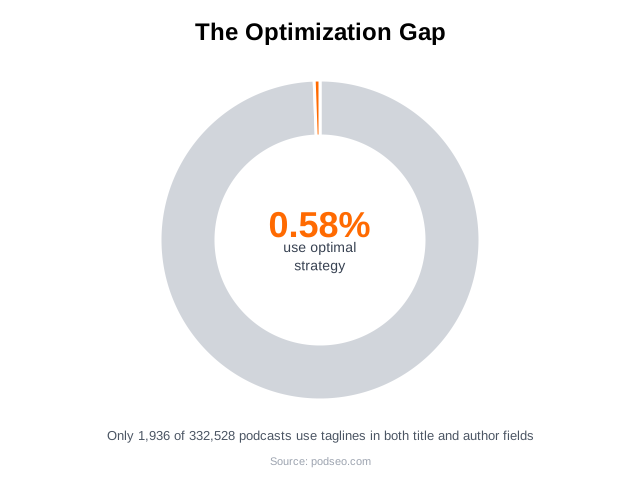
Even more remarkable? Despite these dramatic correlations with better performance, only 0.58% of podcasts use this optimal strategy.
Understanding Taglines: What They Are and Why They Matter
A tagline is additional descriptive text that provides context about your podcast. They’re typically separated from your main title or author name using specific punctuation.
Examples of Effective Tagline Usage:
Title taglines:
- “Tech Talk - Your Daily Dose of Technology News”
- “The Startup Show | Entrepreneurship & Innovation”
- “Mind Matters ; Psychology for Everyday Life”
Author taglines:
- “Jane Smith | Business Strategy Expert”
- “Dr. John Davis - Clinical Psychologist & Researcher”
- “Sarah Johnson ; Award-Winning Journalist”
These taglines serve multiple purposes:
- Provide keyword-rich context for search algorithms
- Clarify your podcast’s focus for potential listeners
- Establish authority and expertise
- Differentiate from similarly named shows
The Current State: A Massive Missed Opportunity
Our analysis of 332,528 active English podcasts revealed:
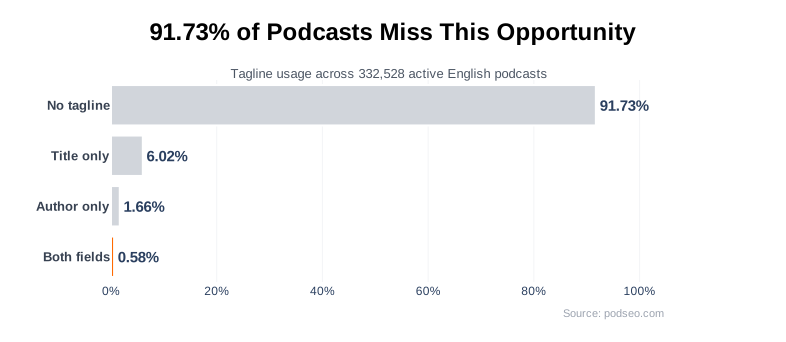
The vast majority of podcasts (91.73%) use no taglines at all. This is a huge optimization opportunity that most creators don’t know about.
Why Do Taglines Correlate with Better Rankings?
Our analysis shows correlation, not causation, but here are some logical reasons why taglines might improve search visibility:
1. Algorithm Context
Search algorithms need to understand what your podcast is about. Taglines provide additional context and keywords that help categorize and rank your content appropriately.
2. Keyword Density
Taglines naturally increase the keyword density of your metadata without keyword stuffing. They allow you to include relevant search terms in a natural, readable way.
3. Professional Presentation
Podcasts with well-crafted taglines often indicate more professional, thoughtfully optimized shows that may have other SEO best practices in place.
4. User Clarity
When users see clear, descriptive taglines in search results, they’re more likely to click through, potentially improving engagement metrics that feed back into ranking algorithms.
The Author Field Advantage
One surprising finding: taglines in the author field alone (0.83 avg on Apple, 0.77 on Spotify) outperform taglines in the title field alone (0.65 avg on Apple, 0.60 on Spotify).
This suggests the author field is particularly underutilized for SEO. Many podcasters simply put their name and nothing else, missing an opportunity to include relevant descriptors, credentials, or topical keywords.
How to Implement Taglines Effectively
For Your Podcast Title
- Keep your main title concise and memorable
- Add a separator ( - , | , or ; )
- Include a descriptive tagline that explains your show’s focus
- Use relevant keywords naturally
Formula: [Catchy Name] [Separator] [Descriptive Tagline with Keywords]
For Your Author Field
- Start with your name or brand
- Add a separator
- Include credentials, expertise, or role
- Consider adding topical keywords if relevant
Formula: [Name/Brand] [Separator] [Credentials/Expertise/Keywords]
Best Practices
- Be authentic: Don’t force keywords that don’t fit
- Stay within character limits: Most platforms have restrictions
- Test different separators: Some may display better on certain platforms
- Update regularly: As your show evolves, so should your taglines
- Check platform guidelines: Make sure you follow terms of service
Platform-Specific Insights
Apple Podcasts
- Shows slightly stronger correlation with tagline usage (6.7x multiplier)
- Author field taglines particularly effective
- Maximum observed keywords for tagline users: 95
Spotify
- Still strong correlation (5.6x multiplier)
- More podcasts lack Spotify IDs (70.6% coverage vs 100% Apple)
- Maximum observed keywords for tagline users: 246
Both platforms show consistent patterns, suggesting this is a universal SEO principle rather than platform-specific quirk.
The Competitive Advantage
With only 8.27% of podcasts using any taglines and a mere 0.58% using them optimally, implementing this strategy puts you ahead of 91-99% of your competition.
This is particularly powerful for:
- New podcasts trying to establish presence
- Niche shows competing in crowded categories
- Rebrand efforts needing visibility boost
- Established shows looking to expand reach
Common Objections Addressed
“Won’t taglines make my podcast name too long?”
Keep your main title short. The tagline just adds context without making it messy.
“Isn’t this keyword stuffing?”
No. Taglines actually help listeners understand what your show is about. The SEO benefit is just a nice side effect.
“My podcast name is already descriptive”
Even descriptive names benefit from additional context. “The Marketing Podcast” becomes more powerful as “The Marketing Podcast - Digital Strategy for Small Business.”
“Platform guidelines restrict this”
All major platforms allow taglines when used appropriately. Avoid excessive keywords or misleading descriptions.
Taking Action: Your Next Steps
- Audit your current metadata: Check your title and author fields
- Research your keywords: What terms does your audience search?
- Craft your taglines: Follow the formulas above
- Update your podcast: Implement changes in your hosting platform
- Monitor results: Track your keyword rankings over time
Remember: Changes to metadata can take days or weeks to fully propagate and impact rankings. Be patient but persistent.
Methodology
We analyzed 332,528 active English podcasts using data from February 24, 2026. We tracked keyword rankings in top 3 positions across Apple Podcasts and Spotify, comparing performance based on tagline usage patterns.
Taglines were identified by the presence of separators ( - , | , ; ) in title or author fields. This shows correlation, not causation. Well-optimized podcasts likely implement multiple best practices at once.
The Bottom Line
Podcast discovery is still one of the biggest challenges in the industry. Taglines offer a simple fix that correlates with much better search visibility.
The data shows podcasts with taglines in both title and author fields get 6.7x better keyword rankings on Apple Podcasts and 5.6x better on Spotify.
You might want to consider adding them to your podcast.
Want to track your podcast’s keyword rankings and find more optimization opportunities? Try Podseo’s podcast SEO platform, where this data comes from.